Vrikshasana (Tree Pose)
Sanskrit Name: Utkatāsana
English Name: Chair Pose
Category: Standing & Foundation Asanas
Difficulty: Beginner to Intermediate
Recommended Hold: 15–30 seconds
What Is Utkatasana?
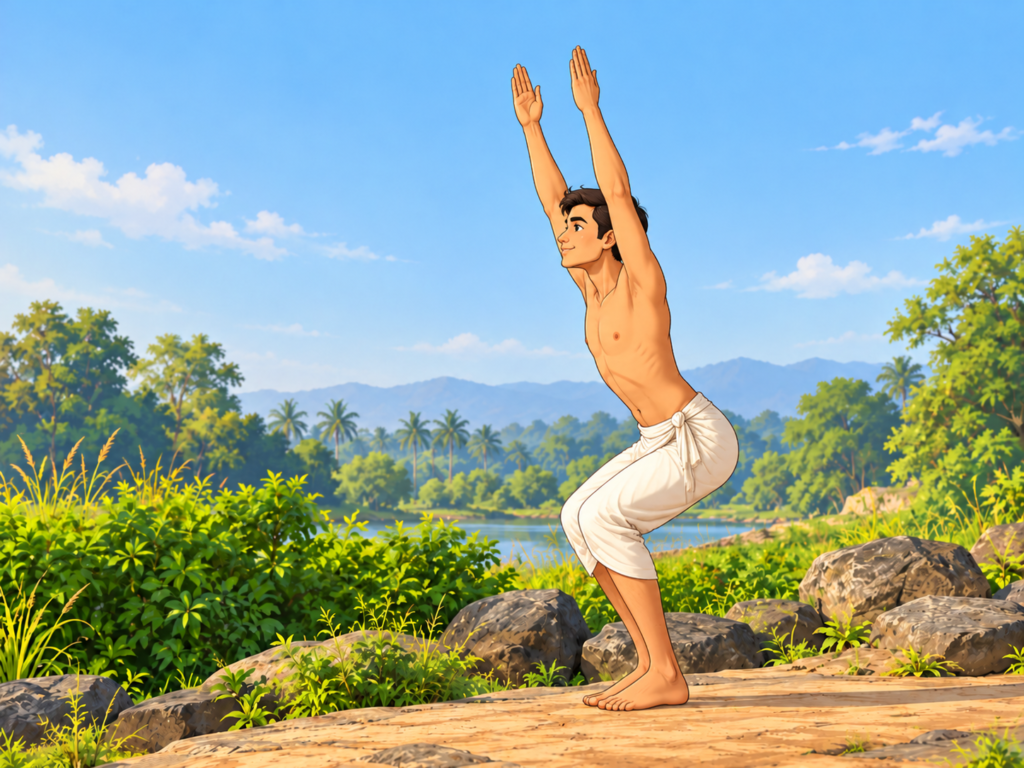
Utkatasana, commonly known as Chair Pose, is a standing yoga posture in which the knees bend and the hips move backward as though you are sitting on an imaginary chair.
The pose engages the legs, hips and core while encouraging balance, stability and controlled posture. When practised with proper alignment, Utkatasana can be a useful strengthening posture within a standing yoga sequence.
How to Do Utkatasana
- Begin standing upright in Tadasana with your feet together or comfortably hip-width apart.
- Distribute your weight evenly across both feet.
- Inhale and raise your arms upward, keeping the shoulders relaxed.
- Exhale and slowly bend your knees while moving the hips backward as though sitting into a chair.
- Keep your chest lifted and your spine long rather than rounding forward.
- Keep the knees aligned with the direction of the toes and avoid allowing them to collapse inward.
- Keep your weight balanced through the feet, with the heels remaining grounded.
- Engage the thighs and abdomen gently while maintaining steady breathing.
- Hold the posture for 15–30 seconds according to comfort.
- Inhale, straighten the legs gradually and return to an upright standing position.
Breathing in Utkatasana
Inhale while preparing and raising the arms.
Exhale as you bend the knees and lower the hips.
While holding the posture, maintain slow and steady breathing. Avoid holding your breath or creating unnecessary tension in the face, neck or shoulders.
Duration and Repetitions
Beginners can start with approximately 10–15 seconds.
As strength and control improve, gradually increase the hold to 20–30 seconds.
Practise 2–3 rounds with a comfortable rest between rounds.
Benefits of Utkatasana
Regular, comfortable practice may help strengthen the thighs, hips and supporting muscles of the legs. It can also support lower-body stability, improve body awareness, develop balance and coordination, engage the core and prepare the body for other standing postures.
Who Should Avoid or Seek Guidance
People with a recent or significant knee, ankle, hip or lower-back injury should seek appropriate guidance before practising Utkatasana.
Anyone experiencing severe dizziness, poor balance or pain while weight-bearing should practise only with suitable support and supervision.
Beginner / Training Tips
Keep the feet slightly apart if balancing with the feet together feels difficult. Do not try to lower the hips too deeply at first. A shallower bend with good alignment is preferable to forcing a deeper position.
You can also practise near a wall or gently touch a stable support until your balance and leg strength improve.
Precautions
Keep the knees aligned comfortably and avoid forcing them inward. Keep the heels grounded and do not lower deeper than your body can control.
If you experience sharp knee pain, back pain, dizziness or unusual discomfort, release the pose and stop the practice.
Common Mistakes
Common errors include allowing the knees to collapse inward, lifting the heels, rounding the upper body excessively, arching the lower back too much, raising the shoulders toward the ears, lowering too deeply before adequate strength develops and holding the breath.
Special Practice Note
The goal of Utkatasana is not to sit as low as possible.
Focus instead on maintaining stable feet, controlled knee alignment, a long spine and steady breathing. A smaller, well-controlled movement is more useful than a deeper posture performed with poor alignment.