
Virabhadrasana I (Warrior I Pose)
Sanskrit Name: Vīrabhadrāsana I
English Name: Warrior I Pose
Category: Standing & Foundation Asanas
Difficulty: Beginner to Intermediate
Recommended Hold: 20–30 seconds on each side
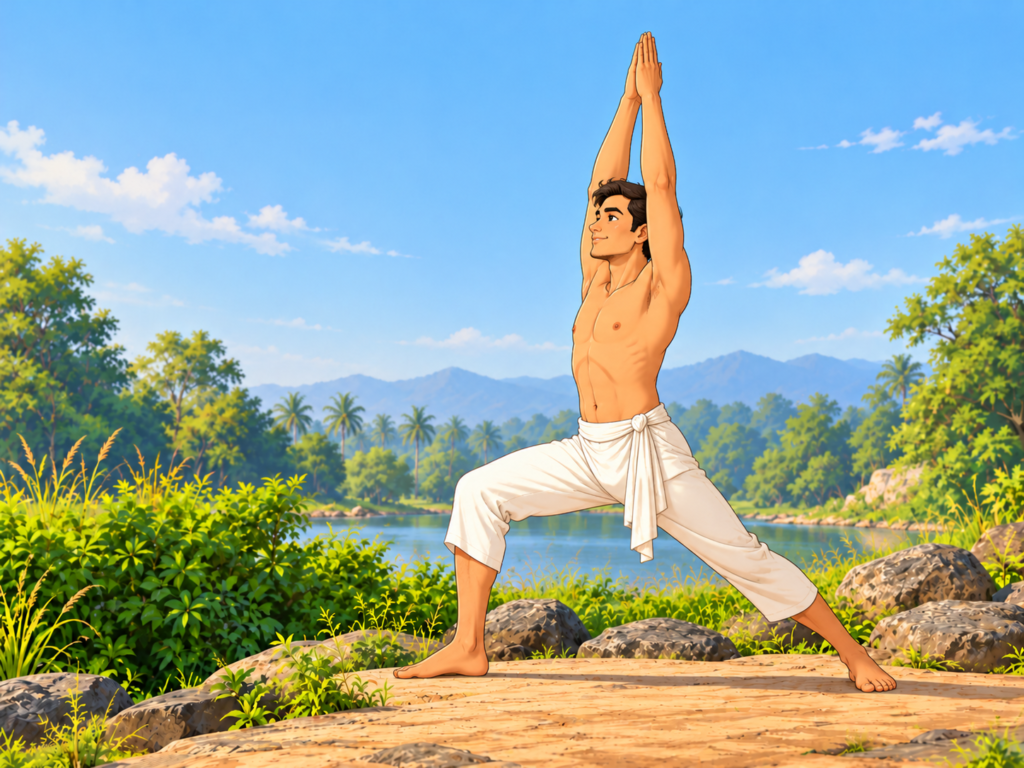
What Is Virabhadrasana I?
Virabhadrasana I, commonly known as Warrior I Pose, is a standing yoga posture that combines lower-body stability with an upright, lengthened upper body.
The pose uses a split-leg stance with the front knee bent and the back leg extended. When practised with comfortable alignment, it can help develop strength, balance, coordination and body awareness while opening the front of the hips and upper body.
How to Do Virabhadrasana I
- Begin standing upright in Tadasana.
- Step your left foot comfortably backward, keeping enough distance between the feet to maintain stability.
- Turn the back foot slightly outward and keep the front foot pointing forward.
- Keep the hips facing generally toward the front without forcing them into a perfectly square position.
- Bend the front knee gradually while keeping it aligned in the same direction as the front toes.
- Keep the back leg active and the back foot grounded comfortably.
- Lengthen the spine and keep the torso upright.
- Inhale and raise both arms overhead. Keep the shoulders relaxed and avoid forcing the arms backward.
- Look forward, or slightly upward only if the neck remains comfortable.
- Maintain steady breathing and hold the posture for about 20–30 seconds.
- Lower the arms, straighten the front leg and step forward carefully.
- Repeat on the opposite side.
Breathing Guide
Inhale as you lengthen the spine and raise the arms.
Exhale as you bend the front knee and settle comfortably into the posture.
While holding Warrior I, continue slow and steady breathing. Avoid holding the breath or creating excessive tension in the shoulders, jaw or face.
Duration and Repetitions
Beginners may start with approximately 15–20 seconds on each side.
As strength, stability and comfort improve, gradually increase the hold to around 30 seconds.
Practise 1–3 rounds on each side with a comfortable pause between rounds.
Benefits of asana
Regular practice of Virabhadrasana I may help:
Strengthen the legs and supporting muscles
Develop balance and lower-body stability
Improve body awareness and coordination
Encourage mobility through the hips
Strengthen the core and postural muscles
Open the chest and shoulders
Prepare the body for other standing yoga postures
Beginner / Training Tips
Shorten the distance between the feet if the stance feels unstable.
Keep the hands on the hips instead of raising the arms if shoulder mobility is limited.
Do not try to bend the front knee too deeply at first.
Keep the feet slightly wider apart from side to side if that gives you better balance.
A comfortable, stable posture is more important than creating a very deep lunge.
Mindful Focus / Mental Awareness
Maintain a calm and steady mind during the posture.
Notice your breathing, balance and the sensations in your body.
If it feels meaningful to you, use a simple positive intention, silent mantra or prayer.
You may visualize each inhalation bringing steadiness and positive energy, and each exhalation releasing tension, stress and unwanted thoughts.
Who Should Avoid or Seek Guidance
People with a recent or significant injury involving the knees, ankles, hips or lower back should seek appropriate guidance before practising this posture.
If you have significant balance difficulties, practise near a wall or other stable support.
People with shoulder or neck problems may need to modify the arm position and gaze.
Precautions
Keep the front knee aligned with the direction of the toes and avoid allowing it to collapse inward.
Do not force the hips to face completely forward if doing so creates discomfort.
Keep the back foot stable and avoid twisting through the knee.
Do not force the arms overhead if this causes shoulder or neck pain.
Stop the practice if you experience sharp pain, dizziness or unusual discomfort.
Common Mistakes
Avoid:
Losing stability through the back footpecial Practice Note
Allowing the front knee to collapse inward
Taking a stance that is too long to control comfortably
Forcing the hips square
Overarching the lower back
Raising the shoulders toward the ears
Holding the breath
Placing excessive tension in the neck
Add any important technique, alignment or awareness note specific to this asana.
Watch this asana Practice
Related Asanas
Tadasana
Utkatasana
Virabhadrasana II
Virabhadrasana III