
Tadasana (Mountain Pose)
Sanskrit Name: Tāḍāsana
English Name: Mountain Pose
Category: Standing & Foundation Asanas
Difficulty: Beginner
Recommended Hold: 20–30 seconds
What Is Tadasana?
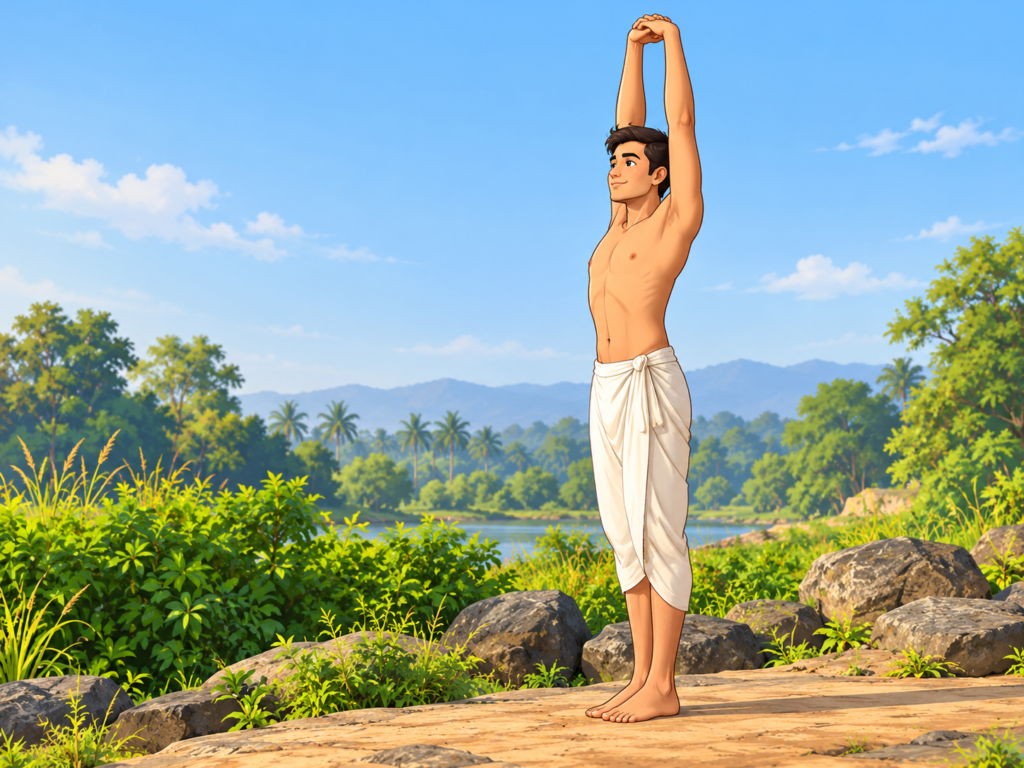
Tadasana, commonly known as Mountain Pose, is a fundamental standing yoga posture that helps develop body awareness, balance and alignment.
Although the posture appears simple, practising Tadasana with attention can teach you how to distribute your body weight evenly, lengthen the spine and maintain a stable yet relaxed standing position. It also creates a useful foundation for many other standing yoga asanas.
How to Do Tadasana
- Stand upright with your feet together or comfortably hip-width apart.
- Place your weight evenly across both feet and keep the toes relaxed.
- Keep the knees straight but avoid locking them. Gently engage the thighs.
- Lengthen the spine and maintain a natural position of the pelvis.
- Keep the chest comfortably open without pushing the ribs forward.
- Relax your shoulders away from the ears and allow the arms to rest beside the body.
- Keep the neck long and the head in a neutral position.
- Look straight ahead and breathe slowly.
- Remain steady for 20–30 seconds, then relax.
Breathing in Tadasana
Maintain slow, natural and comfortable breathing throughout the posture.
As you inhale, gently feel the spine lengthening upward. As you exhale, keep the body stable while allowing unnecessary tension in the shoulders and face to release.
Avoid holding your breath.
Duration and Repetitions
Beginners can start by holding Tadasana for approximately 20–30 seconds.
You may practise 2–3 rounds, taking a short relaxed pause between rounds. As balance and body awareness improve, the posture may be maintained comfortably for longer periods.
Benefits of Tadasana
Regular practice of Tadasana may help improve standing posture, balance and body awareness. It can also help strengthen the legs and supporting muscles, encourage better spinal alignment, develop concentration and coordination, and prepare the body for other standing yoga poses.
Who Should Be Careful?
People who experience significant dizziness, poor balance or weakness while standing should practise near a wall or another stable support.
If you are recovering from a recent injury or surgery involving the legs, hips, knees, ankles or spine, practise only within a comfortable range and follow appropriate professional guidance.
Beginner Tips
If balancing feels difficult, keep your feet slightly apart instead of forcing them together.
Practising near a wall can provide additional confidence and support. Start with shorter holds and gradually increase the duration as the posture becomes more comfortable.
If you are new to Tadasana, keep your feet slightly apart for better balance.
Practise near a wall if you feel unsteady.
Keep the knees soft rather than locking them.
Focus on even weight distribution through both feet.
Start with 20–30 seconds and gradually increase the duration as your balance and posture improve.
Common Mistakes
Avoid locking the knees, shifting most of the body weight onto one foot, lifting or tightening the shoulders, excessively arching the lower back, holding the breath or making the entire body unnecessarily rigid.
Tadasana should feel stable and active, but not tense.
Special Practice Note
The purpose of Tadasana is not simply to stand still.
Try to notice the contact of the feet with the floor, the position of the legs and pelvis, the length of the spine, the position of the shoulders and the rhythm of your breathing.
This awareness is one of the most important aspects of the posture.