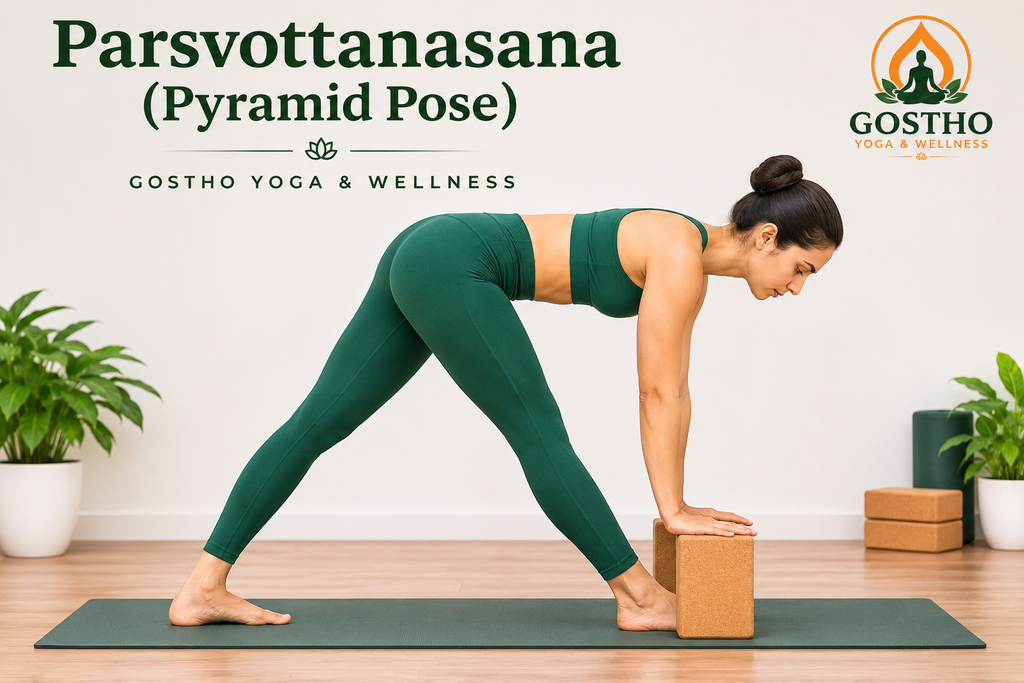
Parsvottanasana (Pyramid Pose)
Sanskrit Name: Pārśvottānāsana
English Name: Pyramid Pose
Category: Standing & Foundation Asanas
Difficulty: Beginner to Intermediate
Recommended Hold: 20–30 seconds on each side
What Is Parsvottanasana?
Parsvottanasana, commonly known as Pyramid Pose, is a standing forward-bending posture performed with one foot placed in front of the other.
The pose combines balance, hamstring lengthening, hip stability and spinal awareness. When practised with control, it encourages a long spine and steady breathing while gradually improving flexibility through the
How to Do Parsvottanasana
- Begin standing upright in Tadasana.
- Step your right foot forward and your left foot comfortably backward.
- Keep both feet grounded and turn the back foot slightly outward.
- Try to keep the hips facing generally forward.
- Place your hands on your hips.
- Inhale and lengthen the spine.
- Exhale and begin hinging forward from the hips.
- Keep the spine long rather than rounding deeply.
- Place your hands on the shin, yoga blocks or floor depending on your flexibility.
- Keep both legs active without locking the knees.
- Allow the head and neck to remain comfortable.
- Breathe slowly and hold for 20–30 seconds.
- Inhale and gradually return to standing.
- Repeat on the opposite side.
Breathing Guide
Inhale while lengthening the spine and preparing the posture.
Exhale gradually as you hinge forward from the hips.
While holding the pose, maintain slow and steady breathing. Avoid forcing the body deeper during exhalation.
Duration and Repetitions
Beginners can start with 10–15 seconds on each side.
Gradually increase the hold to 20–30 seconds as flexibility and balance improve.
Practise 2–3 rounds on each side with a short comfortable rest between rounds.
Benefits of Parsvottanasana
Regular, comfortable practice may help:
- Stretch the hamstrings and calves
- Improve awareness of hip alignment
- Strengthen the legs
- Encourage balance and stability
- Support spinal length and posture awareness
- Improve concentration
- Develop controlled forward-bending movement
Beginner / Training Tips
Keep the feet slightly wider apart if balancing feels difficult.
Use yoga blocks under the hands instead of trying to reach the floor.
Keep a slight bend in the front knee if the hamstrings feel tight.
Focus on lengthening the spine before moving deeper into the forward bend.
Mindful Focus / Mental Awareness
Keep your attention on steady breathing and the connection of both feet with the floor.
As you inhale, imagine lengthening the spine.
As you exhale, allow unnecessary tension in the shoulders, face and jaw to soften.
Focus on controlled movement rather than reaching deeper into the pose
Who Should Avoid or Seek Guidance
People with a recent or significant injury involving the lower back, hips, hamstrings, knees or ankles should seek appropriate professional guidance before practising.
Anyone experiencing severe dizziness, balance difficulty or sharp pain should practise only with suitable
Precautions
Avoid forcing the torso toward the front leg.
Do not lock the knees.
Keep both feet stable and grounded.
Move slowly when entering and leaving the posture.
Stop if you experience sharp pain, dizziness or unusual discomfort.
Common Mistakes
Common mistakes include:
- Rounding the spine excessively
- Locking the front knee
- Forcing the head toward the leg
- Allowing the hips to rotate too far
- Placing the feet too close together for balance
- Holding the breath
- Trying to reach the floor before sufficient flexibility develops
Special Practice Note
The goal of Parsvottanasana is not to touch the forehead to the leg.
Focus instead on stable feet, comfortable hips, a long spine and steady breathing.
A higher position with good alignment is more useful than forcing a deeper forward bend.
Watch this asana Practice
Related Asanas
Tadasana
Trikonasana
Utthita Parsvakonasana
Virabhadrasana I
Virabhadrasana III