
Vrikshasana (Tree Pose)
Sanskrit Name: Vṛkṣāsana
English Name: Tree Pose
Category: Standing & Foundation Asanas
Difficulty: Beginner to Intermediate
Recommended Hold: 20–30 seconds on each side
What Is Vrikshasana?
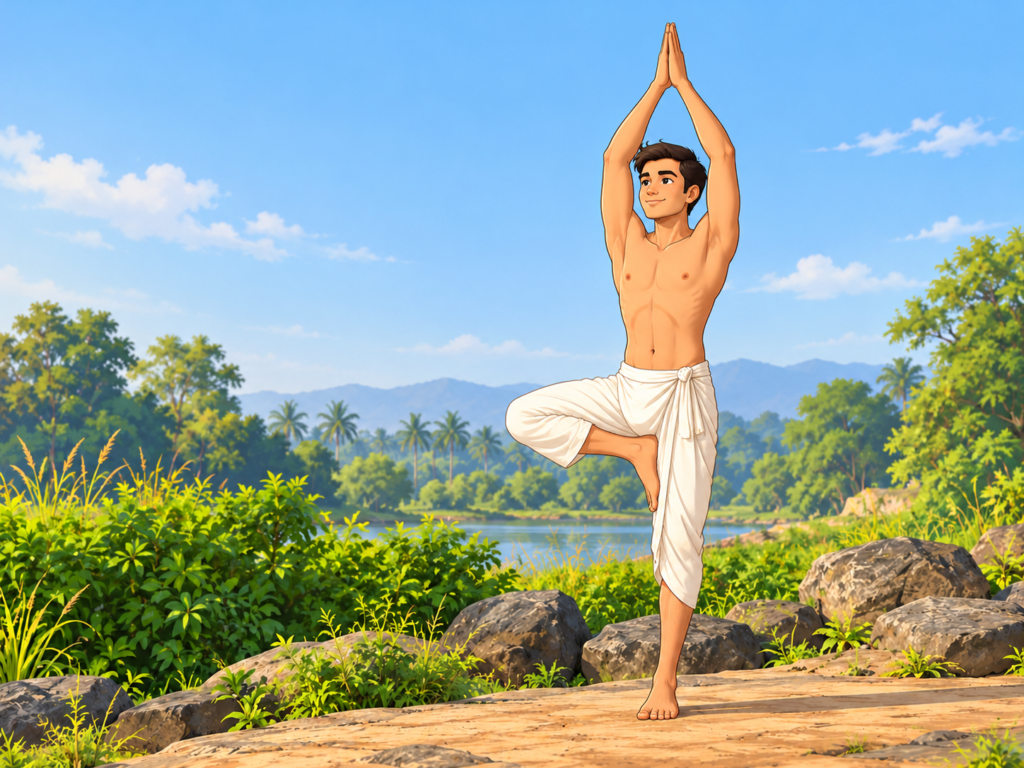
Vrikshasana, commonly known as Tree Pose, is a standing balance posture that helps develop stability, concentration and body awareness.
In this pose, the body remains upright on one leg while the other foot is placed against the standing leg. The posture encourages steady balance, controlled breathing and focused attention.
How to Do Vrikshasana
- Stand upright in Tadasana with your feet together or slightly apart.
- Shift your body weight gradually onto your left foot.
- Bend your right knee and lift the right foot.
- Place the sole of the right foot against the inner left thigh or lower leg. Avoid pressing directly on the knee joint.
- Keep the standing leg active and maintain a tall spine.
- Bring your palms together in front of the chest in Namaste position.
- If comfortable, slowly raise your arms overhead while keeping the shoulders relaxed.
- Fix your gaze on one steady point in front of you.
- Breathe slowly and remain in the posture for 20–30 seconds.
- Lower the arms and leg gently, return to standing, and repeat on the opposite side.
Breathing in Vrikshasana
Breathe naturally and steadily throughout the posture.
Avoid holding the breath while balancing. Slow breathing can help maintain focus and stability.
Duration and Repetitions
Beginners may hold the posture for approximately 15–20 seconds on each side.
As balance improves, gradually increase the duration to around 30 seconds or longer.
Practise 1–3 rounds on each side according to comfort.
Benefits of Vrikshasana
Regular practice may help:
Strengthen stabilising muscles around the hips and legs
Improve balance and coordination
Strengthen the legs and ankles
Develop concentration and mental focus
Improve body awareness
Encourage upright posture
Who Should Avoid or Seek Guidance
People with severe dizziness, significant balance disorders or an unstable lower-limb injury should avoid practising Vrikshasana without support.
If you have a recent ankle, knee, hip or leg injury, practise only with suitable professional guidance.professional guidance.
Beginner / Training Tips
If balancing is difficult, practise near a wall.
You may keep the lifted foot lower on the standing leg instead of placing it high on the thigh.
Focus your eyes on one fixed point rather than looking around.
Do not force the lifted knee outward beyond your comfortable range.
Precautions
Do not place the lifted foot directly against the knee joint.
Avoid locking the standing knee.
Use a wall or chair for support if necessary.
Stop if you experience dizziness, sharp pain or loss of balance that feels unsafe.
Common Mistakes
Avoid:
Forcing the lifted leg too high
Pressing the foot into the knee joint
Leaning the torso to one side
Holding the breath
Looking around while trying to balance
Raising the shoulders when the arms are overhead
Special Practice Note
Balance in Vrikshasana improves more through steady attention than through force.
Keep your gaze relaxed, breathe slowly and focus on maintaining a long spine and stable standing foot.
If you lose balance, simply reset and try again without rushing.