Joint stiffness can make everyday activities such as walking, bending, reaching, or getting up from a chair feel less comfortable. Gentle yoga movements can be a simple way to encourage regular movement, improve body awareness, and support flexibility without forcing the joints.
The goal is not to stretch as far as possible. Move slowly, stay within a comfortable range, and allow your breathing to remain relaxed.
Important: This article is for general educational purposes only and is not a substitute for medical advice, diagnosis, or treatment. If you have significant joint pain, swelling, a recent injury or surgery, severe arthritis symptoms, dizziness, or another medical condition, consult a qualified healthcare professional before starting a new exercise routine.
1. Gentle Shoulder Rolls
Shoulder rolls are an easy way to begin moving the shoulder joints and upper back.
How to practice:
- Sit or stand comfortably.
- Relax your arms beside your body.
- Slowly lift your shoulders toward your ears.
- Roll them backward and gently down.
- Repeat 5–10 times.
- Reverse the direction if comfortable.
Keep the movement smooth and avoid forcing the shoulders.
2. Wrist Circles
Our wrists are used throughout the day for typing, cooking, lifting objects, and using mobile devices. Gentle wrist circles can help maintain comfortable movement.
How to practice:
- Sit comfortably with your arms relaxed.
- Bring your hands in front of you.
- Slowly circle both wrists in one direction.
- Complete 5–10 circles.
- Reverse the direction.
- Keep your fingers relaxed.
If you experience wrist pain, make the circles smaller or stop the movement.
3. Ankle Circles
Ankle mobility is important for comfortable walking, standing, and balance.
How to practice:
- Sit on a stable chair.
- Lift one foot slightly from the floor.
- Slowly circle the ankle 5–10 times.
- Reverse direction.
- Place the foot back down.
- Repeat with the other ankle.
Try to move from the ankle rather than moving the whole leg.
4. Seated Knee Extension
This simple chair-based movement gently moves the knee while also engaging the muscles around the thigh.
How to practice:
- Sit upright on a stable chair.
- Keep both feet on the floor.
- Slowly straighten your right knee until the leg is comfortable.
- Pause briefly without locking the knee.
- Lower the foot slowly.
- Repeat 5–8 times.
- Change sides.
The movement should feel controlled and comfortable.
5. Cat-Cow Movement
Cat-Cow gently moves several areas of the spine and can be useful as part of a mobility routine.
How to practice:
- Begin on your hands and knees.
- Keep your hands approximately under your shoulders.
- Keep your knees approximately under your hips.
- As you inhale, gently lift the chest and allow the spine to move naturally.
- As you exhale, gently round the back.
- Repeat slowly for 5–8 rounds.
Do not force the lower back or neck.
If practising on hands and knees is uncomfortable, use the seated version described below.
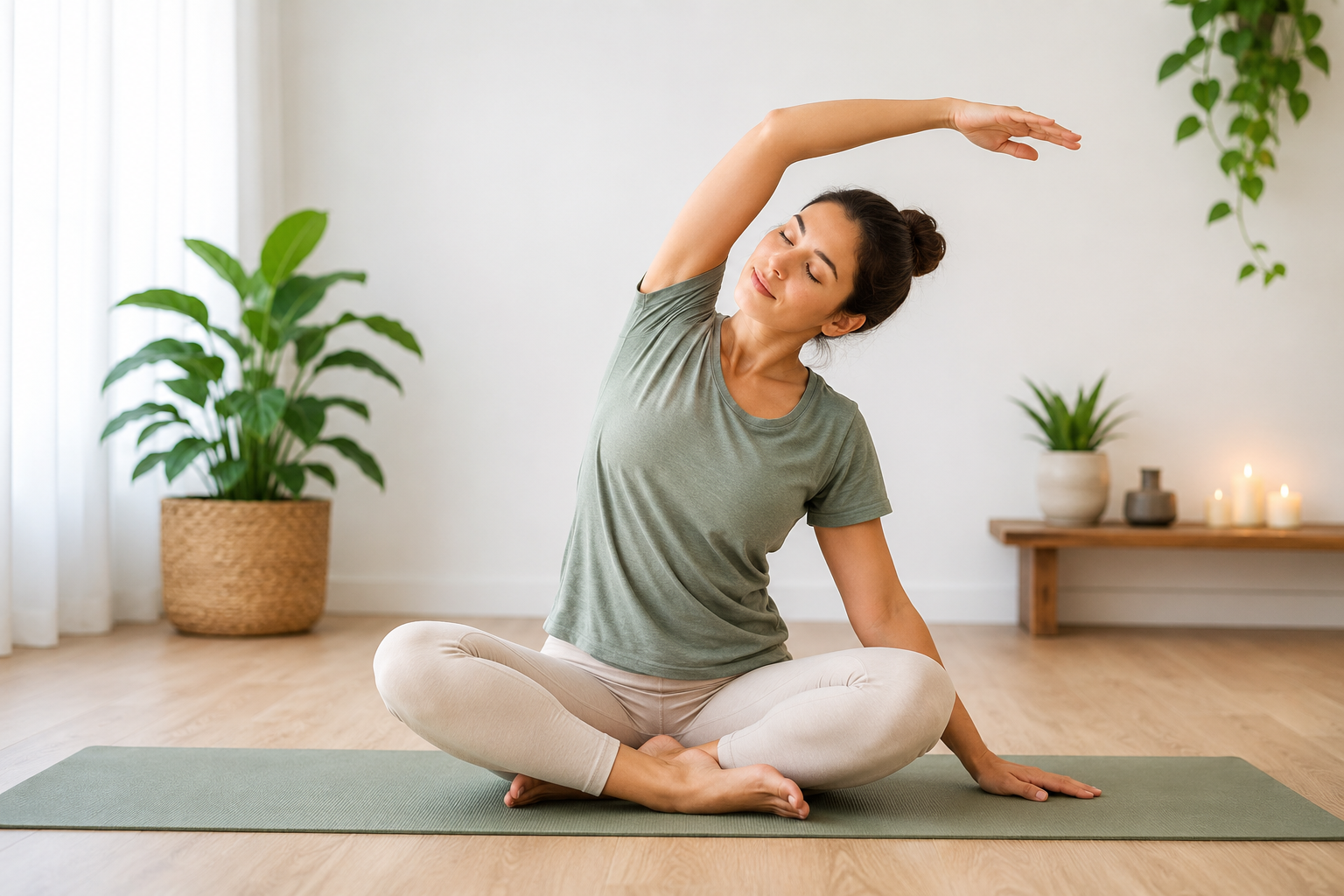
6. Seated Side Bend
A gentle side bend can encourage movement through the sides of the torso, shoulders, and spine.
How to practice:
- Sit upright on a stable chair.
- Keep both feet on the floor.
- Place your right hand beside you or on your thigh.
- Raise your left arm comfortably.
- Gently lean slightly toward the right.
- Keep both sitting bones supported.
- Return to the centre.
- Repeat on the opposite side.
Avoid collapsing forward or forcing the stretch.
7. Gentle Seated Hip Movement
Gentle hip movement can support everyday mobility, especially for people who sit for long periods.
How to practice:
- Sit toward the front of a stable chair.
- Keep your feet comfortably apart.
- Slowly move one knee slightly outward and back toward the centre.
- Repeat 5–8 times.
- Change sides.
- Keep the movement small and comfortable.
You can also gently shift your weight from side to side while keeping both feet supported.
A Simple 10-Minute Joint Mobility Routine
Beginners can combine the movements into a short routine:
- Shoulder Rolls — 1 minute
- Wrist Circles — 1 minute
- Ankle Circles — 2 minutes
- Seated Knee Extension — 2 minutes
- Cat-Cow or Seated Cat-Cow — 2 minutes
- Seated Side Bend — 1 minute
- Gentle Hip Movement — 1 minute
You do not need to complete every movement. Choose the exercises that feel appropriate for your body.
Tips for Safer and More Comfortable Practice
Keep these basic principles in mind:
- Begin with small movements.
- Move slowly and avoid bouncing.
- Do not force a joint beyond its comfortable range.
- Keep breathing naturally.
- Use a stable chair when needed.
- Stop if you experience sharp or increasing pain.
- Avoid comparing your flexibility with another person.
- Consistent gentle movement may be more practical than occasional intense stretching.
- Take regular movement breaks if you spend long periods sitting.
Mobility and Flexibility Are Not the Same
Mobility and flexibility are related, but they are not identical.
Flexibility generally refers to how much a muscle or group of muscles can lengthen.
Mobility refers more broadly to how comfortably and effectively a joint can move through its available range.
A person can therefore be flexible in some areas but still have limited control or mobility in others.
Gentle yoga can include both stretching and controlled movement, which is one reason it can fit well into a general mobility routine.
Frequently Asked Questions
How often can I practise gentle joint mobility exercises?
Short, comfortable mobility sessions can often be included regularly, depending on your health, activity level, and individual needs. Beginners may prefer short sessions and gradually build consistency.
Should I stretch a painful joint?
Do not force a painful joint into a stretch. Mild movement may feel comfortable for some people, but sharp, worsening, or persistent pain should be assessed by a qualified healthcare professional.
Can older adults practise these movements?
Many of these movements can be adapted to a stable chair, but individual ability varies. Older adults or people with balance, joint, or medical concerns should choose appropriate variations and seek professional guidance when needed.
Do I need to be flexible to start yoga?
No. Flexibility is not a requirement for beginning yoga. Gentle yoga can be adapted to different mobility levels, and the aim should be comfortable movement rather than achieving a particular pose.
Final Thoughts
Supporting joint mobility does not require complicated or intense exercise. Gentle movements for the shoulders, wrists, ankles, knees, hips, and spine can be included in a short daily routine.
Focus on comfortable movement, relaxed breathing, and consistency. Your range of movement may be different from someone else’s, and that is completely normal.
Pingback: Daily Posture and Mobility Tips for People Who Sit for Long Hours – GOSTHO Yoga & Wellness
Pingback: Gentle Yoga for Back and Neck Comfort: 8 Easy Practices
Pingback: Posture & Mobility Tips for People Who Sit for Long Hours