
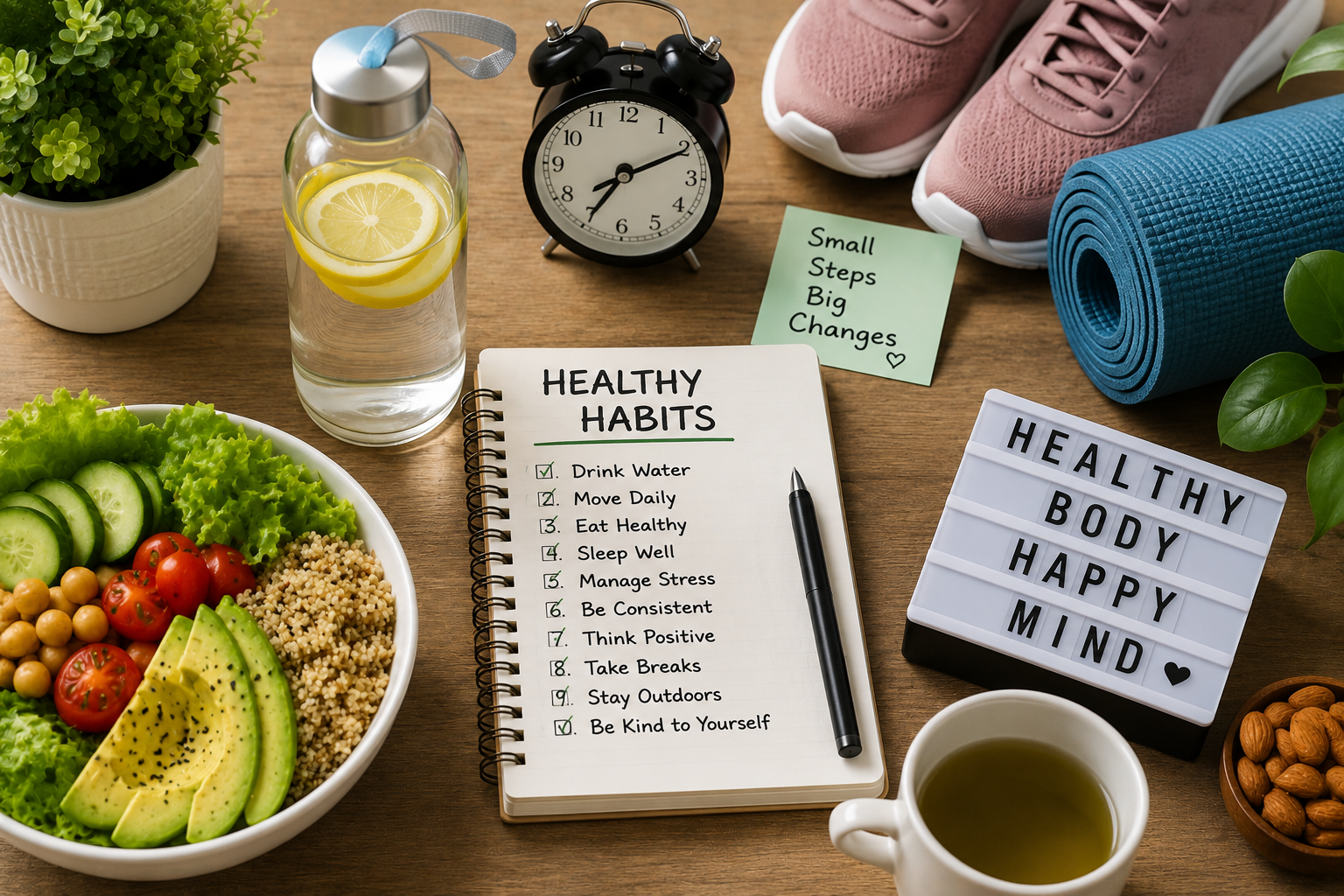
A healthy lifestyle does not always require big changes. Small habits that are realistic and easy to repeat can make a meaningful difference over time.
The goal is not to follow a perfect routine. Instead, focus on simple habits that support movement, sleep, hydration, nutrition, stress management, and overall well-being.
Important: This article is for general educational and wellness purposes only and is not a substitute for medical advice, diagnosis, or treatment. Individual health needs vary, so consult a qualified healthcare professional when appropriate.
1. Start Your Day with Gentle Movement
You do not need an intense workout first thing in the morning.
A few minutes of gentle movement can help your body feel more awake and reduce stiffness.
You might try:
- shoulder rolls
- ankle circles
- gentle side stretches
- easy neck movements
- a short walk
- simple yoga poses
Even 5–10 minutes can be a practical starting point.
2. Drink Water Regularly
Hydration needs vary from person to person, but drinking fluids regularly throughout the day is an important part of general wellness.
A few simple tips:
- keep a water bottle nearby
- drink with meals
- increase fluids when physically active
- consider weather and climate
- pay attention to thirst
People with certain kidney, heart, or medical conditions may need specific fluid guidance from a healthcare professional.
You can also use the Daily Water Intake Calculator on our Yoga Tools page for a general estimate.
3. Take Movement Breaks During Long Sitting
Long periods of sitting can make the body feel stiff and uncomfortable.
Try taking a short movement break every 30–60 minutes when possible.
You can:
- stand up
- walk around the room
- stretch your shoulders
- move your ankles
- gently rotate your wrists
- perform a few chair-based movements
These short breaks can be especially useful for people who work at a desk or spend a lot of time on a phone or computer.
4. Build a Consistent Sleep Routine
Sleep is an important part of recovery and daily functioning.
A consistent bedtime and wake-up schedule may help create a more regular sleep routine.
Helpful habits may include:
- going to bed around the same time
- reducing bright screens close to bedtime
- keeping your bedroom quiet and comfortable
- avoiding stimulating activities late at night
- creating a relaxing evening routine
You can also use the Sleep Duration Calculator in our Yoga Tools section to track how long you spend between bedtime and wake-up time.
5. Include More Whole and Varied Foods
A balanced diet does not have to be complicated.
Try to include a variety of foods such as:
- vegetables
- fruits
- whole grains
- protein-rich foods
- legumes
- nuts and seeds
- healthy fats
The right diet depends on your individual needs, preferences, culture, medical conditions, and lifestyle.
For personalized nutrition advice, consult a qualified dietitian or healthcare professional.
6. Make Time for Relaxation
Stress is a normal part of life, but regular relaxation can be useful for maintaining balance.
Simple relaxation habits include:
- slow breathing
- meditation
- gentle yoga
- listening to calming music
- spending time outdoors
- taking short breaks
- reducing unnecessary screen time
You do not need a long session. Even a few quiet minutes can be helpful.
7. Practise Simple Breathing Awareness
Breathing exercises do not need to be complicated.
A simple practice is to sit comfortably and notice your natural breath for 1–3 minutes.
You can also try:
Inhale gently for 4 seconds
Exhale gently for 6 seconds
Keep the breathing comfortable. There is no need to hold your breath.
If you feel dizzy, short of breath, or uncomfortable, return to normal breathing.
Our Breathing Timer on the Yoga Tools page can help you practise simple timed breathing.
8. Spend Some Time Outdoors
Natural light and outdoor movement can be a useful part of a healthy routine.
You might:
- take a short walk
- sit in a park
- spend time in a garden
- walk during a break
- enjoy morning or evening light
Outdoor time can also provide a useful break from screens and indoor sitting.
Always consider weather, air quality, sun exposure, and personal safety.
9. Reduce Unnecessary Screen Time
Phones, computers, and televisions are useful, but excessive screen time can reduce movement and make it harder to maintain healthy routines.
Try simple strategies such as:
- taking regular screen breaks
- avoiding phone use during meals
- keeping the phone away during relaxation
- reducing screen use before bedtime
- using reminders to stand and move
Small changes are often easier to maintain than strict rules.
10. Focus on Consistency, Not Perfection
One of the most useful healthy habits is avoiding an “all or nothing” mindset.
You do not need to:
- exercise perfectly every day
- follow a strict diet
- meditate for long periods
- sleep perfectly every night
Instead, focus on small actions that you can repeat regularly.
For example:
- 10 minutes of walking
- 5 minutes of stretching
- drinking water with meals
- going to bed slightly earlier
- taking a short breathing break
Consistency is usually more sustainable than extreme routines.
A Simple Daily Wellness Checklist
You can use this simple checklist as a guide:
- Gentle movement
- Regular hydration
- Movement breaks
- Balanced meals
- Time outdoors
- Short relaxation practice
- Reduced unnecessary screen time
- Consistent sleep routine
You do not need to complete every item every day.
How to Build Habits Gradually
Trying to change everything at once can feel overwhelming.
A better approach is to start with one or two habits.
For example:
Week 1:
Drink water regularly and take short movement breaks.
Week 2:
Add a 10-minute walk.
Week 3:
Create a simple bedtime routine.
Week 4:
Add 5 minutes of breathing or meditation.
This gradual approach can make healthy habits easier to maintain.
Frequently Asked Questions
How many healthy habits should I start at once?
Start with one or two simple habits that feel realistic. Once they become easier to maintain, you can gradually add more.
How long does it take to build a habit?
There is no fixed number of days that works for everyone. Habit formation depends on the behaviour, environment, motivation, and individual routine.
Do I need to exercise every day?
Not necessarily. Movement is important, but the right amount and intensity depend on your health, fitness level, and goals.
Is walking enough for a healthy lifestyle?
Walking can be a valuable part of a healthy routine, but overall health also includes sleep, nutrition, strength, mobility, stress management, and other factors.
Can small lifestyle changes really help?
Small habits can be easier to maintain consistently. Over time, regular movement, better sleep habits, hydration, and stress management can support overall well-being.
Final Thoughts
A healthier daily routine does not need to be complicated.
Simple habits such as regular movement, hydration, balanced meals, good sleep, relaxation, and time outdoors can create a strong foundation for everyday wellness.
Start small, build gradually, and focus on consistency rather than perfection.
Pingback: Gentle Yoga & Wellness Practices for Women’s Daily Routine