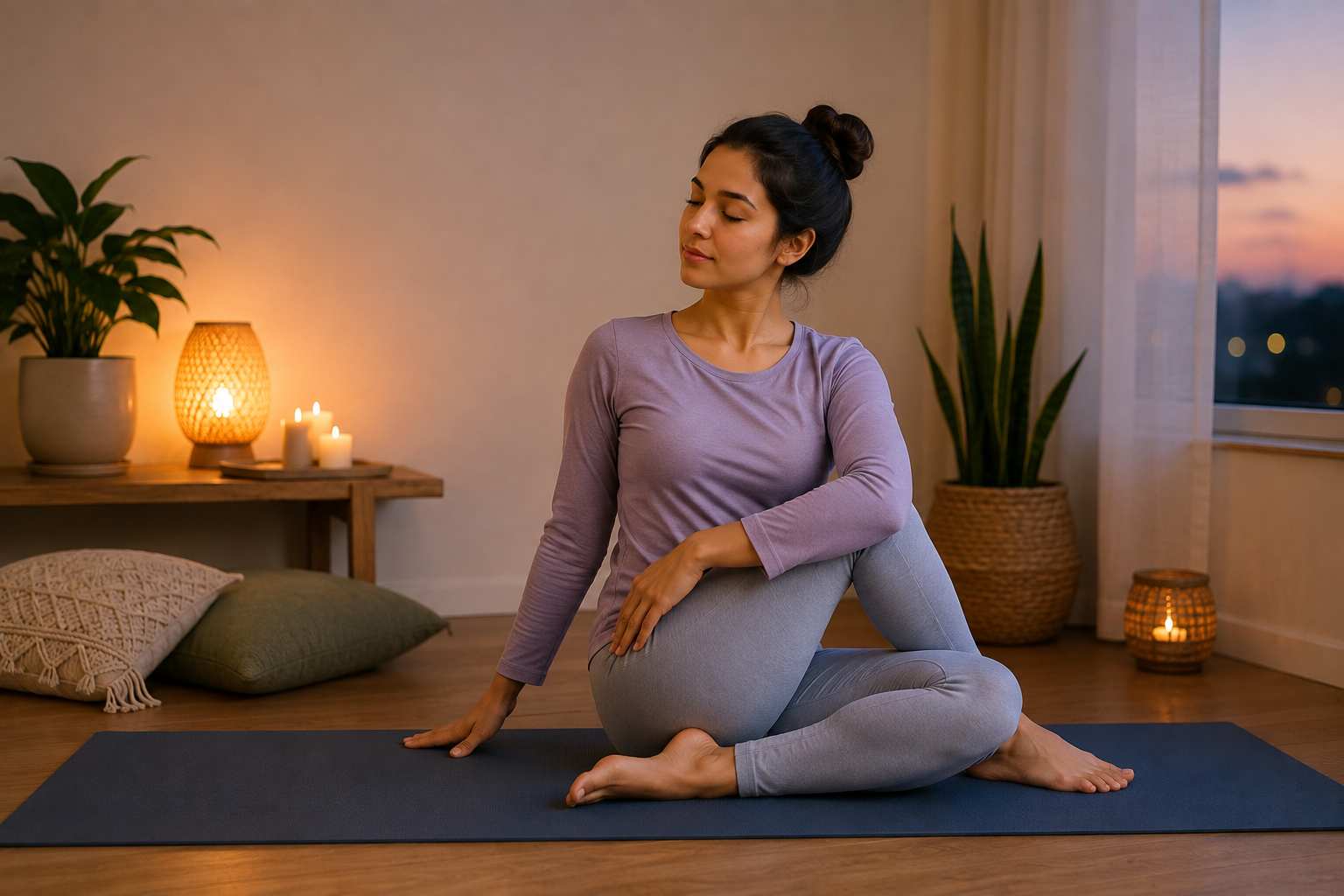
A calm evening routine can help your body and mind shift from a busy day toward rest. Gentle yoga, slow breathing, and quiet relaxation may help reduce physical tension and create a more peaceful bedtime routine.
The aim is not to exercise intensely before bed. Keep the movements slow, comfortable, and relaxing.
Important: This article is for general educational purposes only and is not a substitute for medical advice, diagnosis, or treatment. If you have an injury, severe pain, dizziness, breathing difficulty, or another medical condition, consult a qualified healthcare professional before beginning a new exercise routine.
Why Gentle Evening Yoga Can Be Helpful
Many people spend the day sitting, using phones or computers, travelling, working, or dealing with mental stress. By evening, the body may feel stiff while the mind remains active.
A gentle yoga routine may help by:
- encouraging comfortable movement
- reducing unnecessary muscular tension
- supporting relaxed breathing
- creating a regular transition between daytime activity and bedtime
- helping you become more aware of your body and breathing
Yoga should not be considered a guaranteed treatment for insomnia or sleep disorders. Persistent sleep problems should be discussed with an appropriate healthcare professional.
1. Shoulder Rolls
Shoulder rolls are a simple way to begin releasing tension around the upper back and shoulders.
How to practice:
- Sit or stand comfortably.
- Relax your arms.
- Slowly lift your shoulders toward your ears.
- Roll them backward and gently down.
- Repeat 5–10 times.
- Reverse the direction if comfortable.
Keep your breathing slow and natural.
2. Gentle Neck Side Stretch
This movement may help you relax the neck after a day of computer or phone use.
How to practice:
- Sit upright with your shoulders relaxed.
- Keep your face looking forward.
- Slowly bring your right ear toward your right shoulder.
- Stay for about 10–20 seconds.
- Return to the centre.
- Repeat on the other side.
Do not pull strongly on your head with your hand.
3. Seated Forward Fold
A gentle seated forward fold can be used as part of a quiet evening practice.
How to practice:
- Sit comfortably on the floor or on a folded blanket.
- Extend your legs comfortably or keep the knees slightly bent.
- Sit tall.
- Slowly hinge forward from the hips.
- Rest your hands wherever they comfortably reach.
- Stay for a few relaxed breaths.
Do not force yourself to reach your feet. The goal is relaxation, not maximum flexibility.
4. Child’s Pose
Child’s Pose is often used as a resting posture in yoga.
How to practice:
- Begin on your hands and knees.
- Slowly move your hips back toward your heels.
- Reach your arms forward or rest them beside your body.
- Support your forehead with a cushion if needed.
- Stay for 30–60 seconds while breathing naturally.
If this position causes discomfort in your knees, hips, or back, choose another resting position.
5. Supine Knee-to-Chest
This gentle floor-based movement can help you relax after standing or sitting for long periods.
How to practice:
- Lie comfortably on your back.
- Bend both knees.
- Slowly bring one knee toward your chest.
- Hold behind the thigh or around the shin without pulling aggressively.
- Stay for a few breaths.
- Change sides.
You can also bring both knees toward the chest if that feels comfortable.
6. Gentle Supine Twist
A relaxed twist can be included near the end of an evening routine.
How to practice:
- Lie on your back.
- Bend your knees and keep your feet on the floor.
- Slowly allow both knees to move toward one side.
- Keep your shoulders relaxed.
- Stay for several comfortable breaths.
- Return to the centre.
- Repeat on the other side.
Use a cushion under the knees if additional support feels helpful.
7. Legs Resting on a Chair
You do not need to perform an advanced pose to relax. Resting the lower legs on a chair can be a simple alternative.
How to practice:
- Lie on your back near a stable chair.
- Place your lower legs comfortably on the chair seat.
- Allow your arms to rest beside you.
- Relax your shoulders and jaw.
- Stay for 2–5 minutes if comfortable.
Choose another position if lying flat is not suitable for you.
8. Slow Relaxed Breathing
Finish your evening routine with quiet breathing.
How to practice:
- Sit or lie in a comfortable position.
- Close your eyes if that feels comfortable.
- Breathe in gently through your nose.
- Allow your exhale to be slow and relaxed.
- Avoid forcing extremely deep breaths.
- Continue for 2–5 minutes.
There is no need to hold your breath.
If you feel dizzy or uncomfortable, return to your normal breathing pattern.
A Simple 15-Minute Evening Yoga Routine
You can combine the practices into a short routine:
- Shoulder Rolls — 1 minute
- Gentle Neck Stretch — 2 minutes
- Seated Forward Fold — 2 minutes
- Child’s Pose — 2 minutes
- Knee-to-Chest — 2 minutes
- Gentle Supine Twist — 2 minutes
- Legs Resting on a Chair — 2 minutes
- Relaxed Breathing — 2 minutes
You do not need to perform every movement. Choose the practices that feel comfortable and appropriate for you.
Tips for a Calmer Bedtime Routine
Yoga works best as part of a broader relaxing evening routine.
You may also consider:
- keeping your bedtime reasonably consistent
- reducing bright screens close to bedtime
- keeping the room comfortable and quiet
- avoiding intense exercise immediately before bed if it makes you feel more alert
- practising slow breathing or quiet meditation
- avoiding large meals very close to bedtime
- limiting unnecessary stimulation before sleep
Everyone responds differently, so choose habits that work well for your routine.
Frequently Asked Questions
How long should evening yoga last?
A gentle evening session does not need to be long. Even 10–15 minutes may be enough to create a relaxing routine.
Should evening yoga be intense?
Usually, a calmer practice is more appropriate close to bedtime. Fast or highly demanding exercise may feel stimulating for some people.
Can beginners practise this routine?
Yes, many of these movements are beginner-friendly and can be modified with cushions, blankets, or a chair. Beginners should move slowly and stay within a comfortable range.
Can yoga cure insomnia?
Yoga should not be considered a guaranteed cure for insomnia. Sleep difficulty can have many causes. Gentle yoga may support relaxation, but persistent or severe sleep problems should be evaluated by a qualified healthcare professional.
What if I feel uncomfortable lying on the floor?
You can use chair-based stretches, seated breathing, or other comfortable positions instead. Yoga does not need to be performed on the floor.
Final Thoughts
A peaceful evening yoga routine can be a simple way to slow down after a busy day. Gentle stretches, supported resting positions, and relaxed breathing may help create a calmer transition toward bedtime.
Keep the practice comfortable, avoid forcing any movement, and focus more on relaxation than intensity.